Showing posts with label African hair. Show all posts

Friday, November 18, 2016

FAQs: Your Water is Killing Your Hair (Part 2)

TGIF, MAG Divas! 

Friday took too long to get here. I've been ready to shakitibobo my way to the dance floor since Tuesday. 
Ehn? Ehn?! Take it!
Source: Pinterest

This is Part 2 of my post, "Your Water is Killing Your Hair." You can take a minute to read through that post first if you haven't yet. Then come back and join me here... I'll wait for ya!

Ready? ...

Source: Recipeler


I've gotten some questions regarding apple cider vinegar, so I've collated them here:


What's an apple cider vinegar (ACV) rinse? 
An ACV rinse is when I dilute apple cider vinegar with water and pour it all over my freshly washed and conditioned hair as a final rinse on my wash day. Details of my recipe: here.

What are the benefits of ACV?
ACV rinses smoothen my tresses, cure and prevent hard water damage, and prevent dandruff and itchy scalp.

If I don't do ACV rinses, will my hair still grow?
Your hair will still grow even if you don't do ACV rinses. But if you have hard water damage and you don't do anything else to address it, your hair will just grow and cut, grow and cut (excessive breakage). It'll be too frustrating, really.

Where can I find apple cider vinegar?
You can find it at Ebeano in Lagos or at your local supermarket; Medplus or your local pharmacy; or online at Olori or Fig Health Store (They both ship nationwide!)

How long did it take you to get rid of your hard water damage?
The first time I had hard water damage it took me about 5 months to completely clear it. I did ACV rinses every week and had to do a big trim because I had so many tarnished, split ends. I also remember washing my hair a couple times with Aubrey Organics Swimmer's Shampoo

How would I know when the hard water damage is gone?
Products you know to work well will start working for you again. Also, the hard water damage symptoms should diminish/disappear. Symptoms of hard water damage are here.

How often should I do an apple cider vinegar (ACV) rinse?
When I was first recovering from hard water damage, I rinsed with ACV once a week for the first month. By the second month until the fifth month I was rinsing with ACV just once every two weeks.

Hard water damage is the worst! How can I prevent it from happening again?
Make ACV a regular member of your grow-my-hair committee! You should incorporate it into every wash day for as long as you live in a place that has hard water. 

But ACV has a strong, stinky smell. Won't it make my hair stink too?
The ACV smell disappears once you add your hair moisturizer or oils and your hair is fully dried. I don't rinse out my ACV (I just wait for the smell to vanish upon drying). But if the smell bothers you too much, just pour filtered water onto your mane to get rid of the smell. Alternatively, you can gently squeeze the excess ACV from your hair, which gets rid of most of the smell. 

At what point during my wash process should I do the ACV rinse?
I answered this in my previous post. It's best to do this on wash days after washing & deep conditioning your hair. 

Can I do the ACV rinse before washing or conditioning?
The most effective way would be after washing and conditioning because ACV also closes your cuticles and rebalances the pH (acidity levels) of your tresses. This is all beneficial to the healing process when recovering from and preventing hard water damage and dryness. 

After I rinse with ACV, should I then rinse off the ACV with water?
You can if you want, but you don't have to do so. 

Is ACV safe for kids?
ACV is safe for everyone! It's so safe that some people drink it and others cook with it. I even use it to make homemade salad dressing, yummm. 

I don't like ACV. What's an alternative to cure my hard water damage?
Above I mentioned Aubrey Organics Swimmer's Shampoo. It's an excellent alternative. It's a lot stronger than apple cider vinegar. If you decide to use this shampoo, I'd suggest using it every two weeks for the first 3 months, and from the fourth month onward, use it only once a month. 

ACV rinses don't work for me. My hair is still dry, dry, super dry. What should I do?
Omo, if you're not seeing any improvement with ACV after 6 months, your level of hard water damage don pass ACV stuffs. You may need to switch to that Aubrey Organics Swimmer's Shampoo. But first please revisit the list of symptoms to double check that you even still have hard water damage. Dry hair is not necessarily an indicator of hard water damage; it's just one of the symptoms. 


Whew! We're done. 

I wish you all an amazing weekend full of relaxation, fun, and renewed motivation to get up on Monday and kick ass. Haha. 

Thanks for stopping by,


Monday, May 2, 2016

What is My Real Hair Texture?

I don't really go by any hair-typing systems.

What I've discovered about my hair's texture is that it has 3 "personalities," kind of like alter egos.

You're probably thinking, abeg, what is she talking about???

Before I get into that I have a testimony for ya'll. 

MY HAIR IS TOUGH. It's SUPER TOUGH. And thank God for conditioner and drinking water (yes, drinking water is essential), or else only Lord knows where my hair would be right now. 

Where Mama dey? She'd be the best to tell this story. All my life she had to fight.... She had to fight the curls, she had to fight the kinks, and Ohhhhh Lord, she had to fight the rubbery-ness of my hair. But when she started deep conditioning my hair in 2004, it changed my hair life. From then on we gradually learned how to maintain my hair's moisture levels enough for Mom to braid my hair without tears, screaming, and pure misery. Momsie really tried. I appreciate her patience.

Back to my mane's personalities:

1. Happy Mane 


  • My tresses have the perfect level of moisture as Happy Mane
  • My hair is soft, yet stern, and pliable, so I'm most likely going to have an awesome hair day!
  • It has a slight sheen to it 
  • My curls are semi-defined (those little waves in picture above are my curls)
  • If I moisturize 2-4 times a week OR if I moisturize heavily on wash day and tuck my hair away for the rest of the week, Happy Mane will definitely stick around throughout that week

Character 2: Thirsty Mane

  • Oh geez, when Thirsty Mane shows it's face, wahala dey
  • My strands are dry and rough to the touch 
  • There's A LOT of breakage and tangling 
  • It's difficult to bend, twist, part or comb the hair, which makes it really hard to do any hairstyles 
  • I have no curl definition at all


Character 3: Wet/Damp Mane


  • I love this one because my hair is easiest to maneuver when it's damp or wet
  • My strands are flexible, and if I add detangler, some of the tangles can be easily removed through finger-combing 
  • If it's wet, though, I have to be extra careful so I don't cause breakage 
  • My curls are the most defined in this stage 
  • This personality only comes up temporarily, but it's instrumental 

Letting go of all the hair typing hair curl envy liberated me. I instead focused on learning about my hair texture in various states. And by doing so I've been able to know which hair products to apply and hairstyles to do when my hair is acting a certain way. Life is easier when you know your hair.

What are your mane personalities? 

Sunday, May 1, 2016

Mane Comeback: Grow Your Edges! (*UPDATED*)


Note: Updates have been made on this post. Scroll down for the new tip and picture I share (Tip #3)! 


In August 2011, I suffered from the infamous receding hairline. I was wearing lace wigs most of the time and I wasn't taking care of my hair underneath (bad move).

And, girl, my hairline started to disappear! I already have a big forehead, so the forehead transformed to a five-head and it was NOT a good look.


My hairline started receding again in 2015 when I started neglecting my edges
Anyway, I recovered from it, and pretty quickly too. Within about 3 months, my hairline was back in action! My curlies in the front and not-so-curlies (lol) on the sides of my head were sprouting again. And whenever I wore my hair out, I did so without feeling self-conscious.

There are three major things I did that helped me regrow my hairline:

1. I left those wigs alone during the first 3 months of my recovery (I was fully recovered within 6-7 months)

2. I used a castor oil mix I made to massage my scalp 1-2 times a day


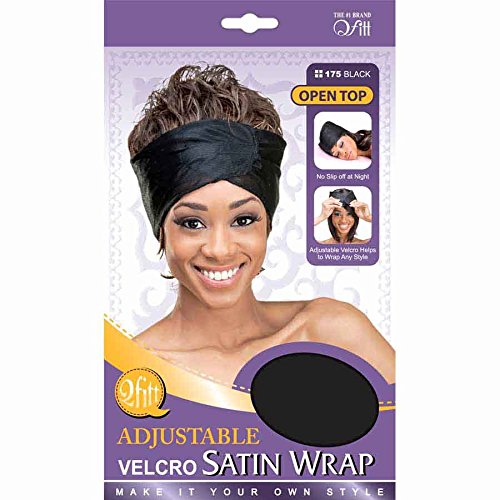
3. I always wore a satin headband (throughout the day and at night). In the first 3 months (the time when I did not wear any wigs) I would wear the headband and put the rest of my hair into a bun or updo. During the final 3 months of recovery (I started wearing wigs again by this time), I wore the headband underneath my wig. I also wore only curly wigs or wigs with big hair that way the big hair would conceal the fact that the front part of my wigs were not completely flat on my head. 


A castor oil mix I made with castor oil, mink oil, coconut oil
Source: Amazon


WARNING: Castor oil contains surfactants (these are chemical compounds that, because of their molecular structure, are good cleansing agents because they attach themselves to dirt and loosen the dirt to be easily washed off). If you have a sensitive scalp, these surfactants can cause itchiness, dryness, burning sensations, or headaches. But what you can do is to mix castor oil with other oils and you should be fine.  Alright, you've been warned. Sensitive scalp ladies, if you try to use pure castor oil itself all over your head, you're on your own oh! I no go rescue you! Haha, just kidding (well, not really).


I'll definitely go back to my castor oil regimen soon

Whatever cream or oil mixture you decide to use is up to you. But the key in growing your hairline is massaging it and using a castor-oil-based anything

Massaging the affected areas (a.k.a the bald spots) will help the blood circulate better at that spot you're massaging. And the better the blood circulation, the better your hair will grow.

Friday, October 16, 2015

Drink Your Way to Healthier Hair

It's important that I mention this: you cannot have healthy hair if you don't have a healthy diet.

Photo credit: Photo Pin

No matter how many times you moisturize, deep condition, or wash your hair, you won't see much progress unless you also clean up your diet (i.e. watch what you eat on a daily basis) 

It's like when you're trying to lose weight; you can do all the sit-ups and jumping jacks you want, but you won't shed much weight until you change your eating habits.

Here's the first step to a healthier you: mind what you drink. 

Mane DOs: 

- Water
- 100% fruit juice from concentrate (Be careful, though; if the product is true to its word it'll have only 2 ingredients on its ingredients list: [insert your favorite fruit here] concentrate & water. No additives, no artificial sweeteners. Heck, no sweeteners at all. 
- Fresh fruit juices (these don't come in a box; buy fruits from the market & put your blender to use!)
- Blended vegetable juice (these also don't come in a box; grab that blender!)


Mane DON'Ts:

- Fruit drinks (yes, there's a difference; fruit drinks are like Kool-Aid, bitter lemon, Snapple, 5-Alive, etc.) 
- Soda/Pop/Mineral (different parts of the world call them different things; but these are basically Coke, Sprite, etc.)
- Malt drink 


Mane Tip: Add slices of fruit to your water. I like to use lemon. It's cheap, easy to find, flavors the water, and speeds up digestion (which is awesome for weight loss or weight maintenance!) 


Before I started my healthy hair journey, I used to drink orange juice ALL the time. My cousins used to tease me about this, by the way; they never understood how someone could drink o.j. 'round the clock. "O.j. is for breakfast! Try something new!" they'd always say. I only drank water occasionally, when I was really, really thirsty (usually after dance rehearsals or workout sessions). 

But when I started drinking 3-4 bottles each day, I noticed that my hair was able to retain more length in a shorter amount of time (in short, it seemed like my hair was growing "faster").

So try it out. Next time you sit to eat, go for water instead of soda. And when you're working at your computer, take a 5-minute water break and grab a glass to drink. Gradually increase your water intake each week, and in 3 months time you'll see that you'll even crave water before it's time for you to drink!

Thursday, January 15, 2015

Tips for Transitioners

There’s no need for a lengthy introduction for this post. The title is pretty much self-explanatory.


Transitioners: Ladies who stop perming (chemically relaxing) their hair in order to rock their hair’s natural curl pattern. Shakin’ what their mamas gave them, au naturale!

If you’re transitioning and you need a little help, check out these tips:


  1. If you want to cut it all off at once (doing the “big chop”), then go ahead. But you actually don’t have to go bald (or almost bald) in order to go natural. You can wear           your hair in a variety of styles while you grow out your relaxer, and just trim the              relaxed ends little by little over a period of time.

      2. Please do NOT fry your natural hair with a flat iron (hair straightener) or blow                   dryer, in efforts to get it straight and blend it with your relaxed ends. That would            cause major breakage…and when irrevocable breakage occurs, you might as well cut          it all off. (Refer to #1)

      3. Beware of the line of demarcation! This is basically the point where your natural               roots meet your straight ends.


Source: A Hair Story

      4. Don’t dye your hair during your transitioning process. Chemical dyes cause our hair             to be drier than usual, which may increase chances of having breakage. And during           your transition, your hair is already fragile, especially at the “line of demarcation”             (See #3)

      5. Find a nice balance between giving your hair enough protein vs. moisture. Use                  protein conditioners once or twice a month, and deep condition your hair with a              moisturizing deep conditioner once a week (or once every two weeks). But pay                attention to how your hair reacts to the way you treat it: if it’s dry and breaks                  easily, then you need moisture; if it’s too mushy and weak, then you need protein            to strengthen it.

       6. Use hairstyles such as bantu knots, roller sets, wigs & sew-in weaves to disguise the           difference in textures on your head so that you can still look cute as you go through           this ugly duckling phase (Hey, I’m just keeping it real).

       7. Find a good detangler. Conditioners that have bihentrium menthosulfate are really            useful, because this ingredient serves as a detangling agent. So check the label of              that conditioner you’re looking to buy and see if bihentrium menthosulfate is                    there. The closer to the top of the ingredient list it is, the larger the amount of it            that’s present in the conditioner, and the better it is for you.

        8. Deep conditioning is your friend, girl! It’ll help you manage the two textures more             easily by making your hair feel soft and prevent breakage. Get to know it!

Hero Hero Bonus: Living in Nigeria (or in hot, humid climate)? Try to limit your hair's exposure to the sun during this transitioning phase, because excessive heat exposure will cause more dryness that you bargained for. If you go for protective styles that hide your hair during most of the transition, it'll make the process a lot easier. So opt for braids (but DON'T make them too small, too tight, nor keep them in too long, abeg!) or weave-ons (again, not too tight, and don't wear them too for too long). 

Congrats if you have decided to go natural; it takes courage and patience to do so. If you’re still debating whether or not to go natural, be sure you do your research, and make sure to keep an open mind.

Until next time!

Friday, January 2, 2015

Winning! Coconut Oil Has Really Helped My Hair (& Nails)


For someone who used spent most of her early life using only Dax/Lanolin and Blue Magic grease on her hair, I’m definitely playing by a different set of rules nowadays. 

Coconut oil is the TRUTH, oh! 


Source: My Blessed Life

Tell your mama, share it with your friends, and introduce it to your pikin. 

I love coconut oil, because it’s so versatile; if I could write a song about it, I would! 

By the way, I only use pure/extra virgin coconut oil. The purer, the better. 

Benefits of Coconut Oil:


  • Strengthens AND moisturizes my hair
  • Strengthens my nails 

How I Use  Coconut Oil:
  • As a "pre-poo" (pre-shampoo) treatment
  • As a deep conditioner


The pre-poo is a process that I do before I wash my hair where I coat my hair strands and my scalp with coconut oil or a mix of oils. This helps to keep my hair moisturized, even while the shampoo is cleansing my hair. It prevents my hair from feeling hard and dry after the shampoo process.


How it Works:


  • As a pre-poo (hair): Coconut oil is the only natural oil that has been scientifically proven to penetrate the hair shaft. Because of its ovalene molecular structure, coconut oil, if it sits on the hair long enough (a few hours or overnight is best), its molecules can twist and turn and maneuver their way past the hair cuticles and into the inner parts of our hair strands, blessing the hair with moisture from the inside out (Amen, oh!). 


Source: Black Girl Long Hair


 Other popular oils such as olive oil, castor oil, and grease/petroleum jelly/petrolatum        have molecules that are way too big to penetrate the openings in our hair shaft, and therefore just sit on TOP of the hair without giving the hair the thorough moisture that it needs below the hair’s surface. So even when your hair is so greasy that you can lean on a chair and leave a grease spot (I've done that before--so embarrassing!),        but the hair still feels hard/rough to to the touch, this is why. That oil or grease you put on your hair is only disguising the fact that your hair is dry, dry, crunchy dry! 


  • As a deep conditioner (hair): Coconut oil has a bit of protein in it. That being said, you can be assured that it’ll give your hair strands some strength it needs to withstand your constant combing, twisting, relaxing, plaiting, weaving, etc. 


  • As a moisturizer & strengthener (nails): The health of my nails, cuticles and the skin around my nails has improved dramatically since I started rubbing coconut oil on my hands. And as long as I’m using is regularly, I don’t get blisters, dry patches, or hang nails on my fingers. And my nails (which usually don’t grow passed a certainly length) are now longer than they have been in years. Simply massage a small dab of coconut oil on the tips of your fingers every night before bed. 


  • As a skin moisturizer: Recently, I added coconut oil to a bottle of skin lotion. And what a brilliant idea, if I do say so myself. I was pretty much ready to throw that lotion away (it was a brand I was trying for the first time, and it was not moisturizing enough for my dry skin). But now that I’ve added coconut oil to it, the remixed formula keeps my skin feeling soft and supple all day long. Winning! So ladies, before you throw away that cheap lotion that didn’t work for you, try adding the oil first. 


Bonus Tip: Live in Nigeria? Check out Daytona Pharmacy in Lekki (Lagos), or order online from Natural Nigerian for some coconut oil


For those of you who have had experience with using coconut oil, do you like it?


And to those of you who haven’t used coconut oil before, does this info encourage you to try it out? 


Let me know!